
Sponsored Find a Solicitor — free quotes via ReallyMoving
Land
Next Steps
Sponsored — free quotes via ReallyMoving
Find a Solicitor
Land purchases need specialist legal advice — compare fees
Price History
Our Summary
- Several of the posts remain remarkably intact, retaining original fittings, equipment, and surface installations, offering significant appeal to historians, specialist investors, and those seeking unique development opportunities (subject to consent)
- The vendor’s preference is to dispose of the sites as a single lot, presenting a unique portfolio acquisition with potential for development, heritage preservation, communications infrastructure, or alternative niche uses
- Whilst no assurances can be given and all proposals would be subject to obtaining the necessary planning permissions and consents, the portfolio offers clear potential for alternative uses, reflecting the wider national precedent for the adaptive reuse of these unique structures
- All sites are considered to comprise previously developed land (brownfield), further supporting the potential for alternative uses or redevelopment, subject to securing the appropriate planning permissions
- As such, the land may be of interest for continued communications use, investment purposes, or as potential development plots for residential or commercial schemes, subject to planning consent
- Typically manned by volunteer observers, the posts were designed to be occupied for extended periods following a nuclear event, recording blast pressures, fallout levels, and relaying information to regional controls
Get alerted when similar properties are listed — Subscribe
Description
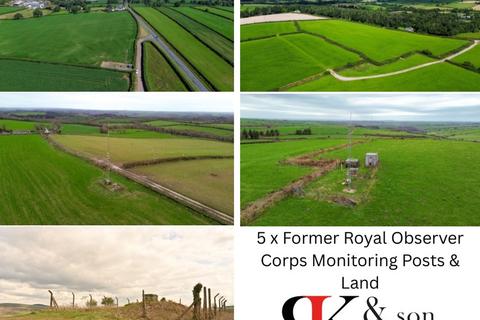
A portfolio of five former Royal Observer Corps (ROC) monitoring posts is being offered as a single lot in South and West Wales. Each of the five sites extends to approximately the same plot size and contains the same standard Royal Observer Corps bunker design, which features a hardened underground monitoring post with surface access structures and associated features. The posts retain original fittings, equipment, and surface installations, and several have significant appeal to historians and specialist investors due to their unique Cold War heritage.
The sites are located in rural areas with surrounding agricultural land and some have been repurposed for telecommunications infrastructure. All sites are considered previously developed land (brownfield), suggesting potential for alternative uses or redevelopment subject to planning permissions.